- h
DecodingTrust
- huggingface.co
Updated Aug 11, 2024 Share
Share Facebook
 Twitter
 EmailClick to copy linkLink copiedCiteSecure Learning Lab (2024). DecodingTrust [Dataset]. https://huggingface.co/datasets/AI-Secure/DecodingTrustDataset updatedAug 11, 2024Dataset authored and provided bySecure Learning LabLicense
Attribution-ShareAlike 4.0 (CC BY-SA 4.0)https://creativecommons.org/licenses/by-sa/4.0/
License information was derived automaticallyDescriptionDecodingTrust: A Comprehensive Assessment of Trustworthiness in GPT Models
OverviewThis repo contains the source code of DecodingTrust. This research endeavor is designed to help researchers better understand the capabilities, limitations, and potential risks associated with deploying these state-of-the-art Large Language Models (LLMs). See our paper for details. DecodingTrust: A Comprehensive Assessment of Trustworthiness in GPT Models Boxin Wang, Weixin Chen, Hengzhi… See the full description on the dataset page: https://huggingface.co/datasets/AI-Secure/DecodingTrust.
- N
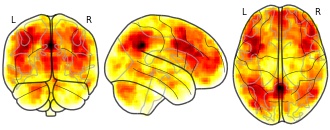
Neural representations of honesty predict future trust behavior:...
- neurovault.org
niftiUpdated Dec 2, 2019+ more versionsShareFacebookTwitterEmailClick to copy linkLink copiedCite(2019). Neural representations of honesty predict future trust behavior: trustworthiness decoding network [Dataset]. http://identifiers.org/neurovault.image:312317niftiAvailable download formatsUnique identifierhttps://identifiers.org/neurovault.image:312317Dataset updatedDec 2, 2019LicenseCC0 1.0 Universal Public Domain Dedicationhttps://creativecommons.org/publicdomain/zero/1.0/
License information was derived automaticallyDescriptionContrast 1: reliability
Collection description
Subject species
homo sapiens
Map type
Other
- h
MMDecodingTrust-T2I
- huggingface.co
Updated Sep 23, 2024+ more versionsShareFacebookTwitterEmailClick to copy linkLink copiedCiteSecure Learning Lab (2024). MMDecodingTrust-T2I [Dataset]. https://huggingface.co/datasets/AI-Secure/MMDecodingTrust-T2IDataset updatedSep 23, 2024Dataset authored and provided bySecure Learning LabDescriptionOverview
This repo contains the text-to-image dataset of MMDT (Multimodal DecodingTrust). This research endeavor is designed to help researchers and practitioners better understand the capabilities, limitations, and potential risks involved in deploying the state-of-the-art Multimodal foundation models (MMFMs). This dataset focuses on the following six primary perspectives of trustworthiness, including safety, hallucination, fairness, privacy, adversarial robustness, and… See the full description on the dataset page: https://huggingface.co/datasets/AI-Secure/MMDecodingTrust-T2I.
Trust and Trends in Jakarta's E-commerce: Decoding Gen Z's Shopping Habits
- zenodo.org
Updated Jan 25, 2025ShareFacebookTwitterEmailClick to copy linkLink copiedCiteErwin Halim; Erwin Halim (2025). Trust and Trends in Jakarta's E-commerce: Decoding Gen Z's Shopping Habits [Dataset]. http://doi.org/10.5281/zenodo.14737446Unique identifierhttps://doi.org/10.5281/zenodo.14737446Dataset updatedJan 25, 2025AuthorsErwin Halim; Erwin HalimLicenseAttribution 4.0 (CC BY 4.0)https://creativecommons.org/licenses/by/4.0/
License information was derived automaticallyTime period coveredJan 25, 2025Area coveredJakartaDescriptionAbstract — The evolution of e-commerce has significantly transformed consumer behavior, particularly among Generation Z in Jakarta. This study examines the combined impact of e-commerce trends and trust on the shopping habits of this demographic. With a focus on social media engagement, platform usability, and perceived trustworthiness, the research identifies critical factors influencing purchase decisions. Using data from Jakarta-based respondents and analyzed through Smart-PLS, this study offers actionable insights for businesses targeting Generation Z’s unique preferences and expectations.
Supplementary material: Multilayer network decoding versatility and trust
- figshare.com
pdfUpdated Dec 9, 2015ShareFacebookTwitterEmailClick to copy linkLink copiedCiteCamellia Sarkar; Alok Yadav; Sarika Jalan (2015). Supplementary material: Multilayer network decoding versatility and trust [Dataset]. http://doi.org/10.6084/m9.figshare.1537421.v2pdfAvailable download formatsUnique identifierhttps://doi.org/10.6084/m9.figshare.1537421.v2Dataset updatedDec 9, 2015AuthorsCamellia Sarkar; Alok Yadav; Sarika JalanLicenseAttribution 4.0 (CC BY 4.0)https://creativecommons.org/licenses/by/4.0/
License information was derived automaticallyDescriptionThe supplementary material include significance of power law fitting, average clustering coefficient and Pearson (degree-degree) correlation coefficient values of corresponding random networks, the standard deviation of award nominations, the list of highest degree nodes, analysis of dimers and triangles and analysis of link betweenness centrality and overlap for the datasets.
- G
VIN Decoding Solutions Market Research Report 2033
- growthmarketreports.com
csv, pdf, pptxUpdated Oct 6, 2025ShareFacebookTwitterEmailClick to copy linkLink copiedCiteGrowth Market Reports (2025). VIN Decoding Solutions Market Research Report 2033 [Dataset]. https://growthmarketreports.com/report/vin-decoding-solutions-marketpptx, pdf, csvAvailable download formatsDataset updatedOct 6, 2025Dataset authored and provided byGrowth Market ReportsTime period covered2024 - 2032Area coveredGlobalDescriptionVIN Decoding Solutions Market Outlook
According to our latest research, the global VIN Decoding Solutions market size reached USD 1.42 billion in 2024, reflecting robust demand from diverse automotive and mobility sectors. The market is experiencing a healthy expansion, registering a CAGR of 12.6% from 2025 to 2033. By the end of 2033, the VIN Decoding Solutions market is projected to attain a value of USD 4.17 billion. The primary growth drivers for this market include the increasing digitization of automotive services, the need for accurate vehicle identification, and the rising adoption of advanced analytics in the automotive ecosystem.
The VIN Decoding Solutions market is experiencing rapid growth as the automotive industry continues its digital transformation journey. One of the key growth factors is the surge in connected vehicle technologies, which necessitates precise and real-time vehicle identification for a range of applications, from fleet management to insurance underwriting. The proliferation of electric vehicles (EVs) and the growing complexity of vehicle architectures have further amplified the need for advanced VIN decoding capabilities. As regulatory frameworks around vehicle safety, emissions, and traceability become more stringent worldwide, OEMs, dealerships, and service providers are increasingly turning to sophisticated VIN decoding solutions to ensure compliance and operational efficiency. This underlying trend is expected to fuel market expansion as stakeholders seek to streamline processes, enhance transparency, and mitigate risks across the vehicle lifecycle.
Another significant growth factor for the VIN Decoding Solutions market is the escalating demand for seamless customer experiences in automotive retail and aftersales services. Automotive dealerships and aftermarket players are leveraging VIN decoding software and services to deliver personalized offerings, automate inventory management, and improve customer engagement. The integration of VIN decoding with digital platforms, such as online vehicle marketplaces and mobile applications, is enabling users to access comprehensive vehicle history, specifications, and maintenance records instantly. This not only enhances buyer trust but also helps businesses optimize their operations by reducing manual errors and fraud. The trend towards digital-first automotive transactions, accelerated by the global shift to e-commerce, is expected to sustain strong demand for robust VIN decoding solutions throughout the forecast period.
Additionally, the growing emphasis on data-driven decision-making across the automotive value chain is propelling the adoption of VIN decoding solutions. Fleet operators, insurance companies, and government agencies are increasingly utilizing VIN data to assess vehicle risk, monitor compliance, and support law enforcement activities. The integration of artificial intelligence (AI) and machine learning (ML) into VIN decoding platforms is unlocking new opportunities for predictive analytics, fraud detection, and automated reporting. As the volume and complexity of vehicle data continue to rise, the need for scalable and interoperable VIN decoding solutions becomes paramount. This shift towards advanced analytics and automation is expected to further accelerate market growth, particularly in regions with mature automotive ecosystems and high digital adoption rates.
From a regional perspective, North America remains the dominant market for VIN Decoding Solutions, driven by the presence of leading automotive manufacturers, a mature aftermarket, and stringent regulatory requirements. Europe follows closely, bolstered by strong automotive exports and a focus on vehicle safety and environmental compliance. The Asia Pacific region is emerging as a high-growth market, supported by rapid motorization, expanding vehicle fleets, and increasing investments in digital infrastructure. Latin America and the Middle East & Africa are also witnessing steady adoption, although market penetration remains comparatively lower due to infrastructural and regulatory challenges. Overall, the global outlook for the VIN Decoding Solutions market is highly positive, with technological advancements and regulatory developments expected to shape its trajectory in the coming years. - G
Connected VIN Decoding Services Market Research Report 2033
- growthmarketreports.com
csv, pdf, pptxUpdated Oct 4, 2025ShareFacebookTwitterEmailClick to copy linkLink copiedCiteGrowth Market Reports (2025). Connected VIN Decoding Services Market Research Report 2033 [Dataset]. https://growthmarketreports.com/report/connected-vin-decoding-services-marketpptx, pdf, csvAvailable download formatsDataset updatedOct 4, 2025Dataset authored and provided byGrowth Market ReportsTime period covered2024 - 2032Area coveredGlobalDescriptionConnected VIN Decoding Services Market Outlook
According to our latest research, the global Connected VIN Decoding Services market size reached USD 1.12 billion in 2024, demonstrating robust demand driven by the automotive sector’s digitization. The market is anticipated to expand at a CAGR of 13.4% from 2025 to 2033, with the forecasted market size expected to reach USD 3.52 billion by 2033. This impressive growth is primarily attributed to the increasing adoption of connected vehicle technologies, regulatory mandates for vehicle traceability, and the rising demand for real-time vehicle information across various industry verticals.
A significant growth factor for the Connected VIN Decoding Services market is the automotive industry's digital transformation, which is fundamentally altering how vehicle information is accessed and utilized. As connected vehicles become mainstream, the need for accurate, real-time data about vehicle specifications, ownership history, and compliance is intensifying. VIN decoding services are integral to this ecosystem, enabling stakeholders—ranging from dealerships to insurance companies—to instantly retrieve detailed vehicle information using a standardized identification number. This capability streamlines business operations, supports compliance with evolving regulations, and enhances customer experiences by providing transparency and reducing manual errors in vehicle data management. Furthermore, the proliferation of electric vehicles and advanced driver-assistance systems (ADAS) has created new layers of complexity in vehicle identification, further driving the demand for sophisticated VIN decoding solutions.
Another pivotal driver for market expansion is the growing emphasis on fraud prevention, regulatory compliance, and vehicle lifecycle management. Regulatory bodies worldwide are tightening measures to combat vehicle-related fraud, enforce emissions standards, and ensure traceability throughout a vehicle’s lifecycle. Connected VIN decoding services empower stakeholders to validate vehicle authenticity, monitor recalls, and track service histories in real time. This not only mitigates risks associated with counterfeit parts and odometer tampering but also supports government agencies in enforcing road safety and environmental standards. As automotive supply chains become more globalized and fragmented, the ability to seamlessly decode VINs and access standardized data across geographies is becoming indispensable for OEMs, fleet operators, and aftermarket service providers alike.
The surge in digital retailing and online vehicle transactions is also propelling the Connected VIN Decoding Services market. With consumers increasingly leveraging digital channels to buy, sell, and insure vehicles, there is a heightened need for instant, reliable vehicle information. VIN decoding services, integrated into web-based platforms and mobile apps, facilitate transparent transactions by providing comprehensive vehicle histories, accident records, and inspection details at the click of a button. This trend is particularly pronounced in the used car market, where trust and transparency are critical to buyer confidence. As digital marketplaces and automotive fintech solutions proliferate, the integration of connected VIN decoding capabilities is expected to become a standard feature, further fueling market growth.
From a regional perspective, North America currently leads the Connected VIN Decoding Services market, accounting for the largest share in 2024, followed closely by Europe and Asia Pacific. The dominance of North America can be attributed to its advanced automotive infrastructure, stringent regulatory environment, and early adoption of connected vehicle technologies. Europe’s market is driven by strong regulatory compliance requirements and a mature automotive aftermarket, while Asia Pacific is witnessing rapid growth due to expanding vehicle fleets, digital transformation initiatives, and rising investments in smart mobility solutions. Latin America and the Middle East & Africa are also emerging as promising markets, supported by increasing vehicle sales and the gradual digitization of automotive services."https://growthmarketreports.com/request-sample/185649">
<button class="btn btn-lg text-center" id="free_sample_btn" - G
Automotive VIN Decoding API Market Research Report 2033
- growthmarketreports.com
csv, pdf, pptxUpdated Oct 7, 2025ShareFacebookTwitterEmailClick to copy linkLink copiedCiteGrowth Market Reports (2025). Automotive VIN Decoding API Market Research Report 2033 [Dataset]. https://growthmarketreports.com/report/automotive-vin-decoding-api-marketpptx, pdf, csvAvailable download formatsDataset updatedOct 7, 2025Dataset authored and provided byGrowth Market ReportsTime period covered2024 - 2032Area coveredGlobalDescriptionAutomotive VIN Decoding API Market Outlook
According to our latest research, the global Automotive VIN Decoding API market size reached USD 1.04 billion in 2024, reflecting the rapid digitalization within the automotive sector. The market is projected to grow at a CAGR of 12.6% from 2025 to 2033, reaching a forecasted value of USD 3.05 billion by 2033. This robust growth is primarily driven by the increasing demand for real-time vehicle data integration, heightened regulatory mandates for transparency, and the proliferation of connected vehicles across both developed and emerging economies.
A key growth driver in the Automotive VIN Decoding API market is the expanding adoption of digital platforms in the automotive industry, which has created a significant need for seamless data exchange across various stakeholders. Automotive VIN Decoding APIs enable instant access to comprehensive vehicle information, including manufacturing details, service history, and specifications, by simply inputting the Vehicle Identification Number (VIN). This capability is crucial for dealerships, fleet operators, and insurance companies seeking to streamline operations, enhance customer service, and minimize fraud. The integration of these APIs with cloud-based platforms and mobile applications further amplifies their value proposition, offering scalability and flexibility that aligns with the evolving digital landscape.
Another major growth factor is the increasing regulatory emphasis on vehicle transparency and safety. Governments in North America, Europe, and Asia Pacific have introduced stringent policies mandating accurate vehicle data disclosure for ownership transfers, insurance claims, and emission compliance. Automotive VIN Decoding APIs play a pivotal role in ensuring regulatory compliance by providing verified, up-to-date vehicle data to all relevant parties. This not only reduces administrative burden but also fosters trust among consumers and regulatory bodies. The surge in used car sales and cross-border vehicle transactions further accentuates the need for reliable VIN decoding solutions, as stakeholders seek to validate vehicle authenticity and history before making critical decisions.
The rapid proliferation of connected and electric vehicles is also fueling demand for advanced VIN decoding capabilities. As vehicles become increasingly sophisticated with embedded telematics, IoT sensors, and over-the-air updates, the complexity of vehicle data has surged. Automotive VIN Decoding APIs are evolving to decode a broader range of data attributes, supporting applications in predictive maintenance, warranty management, and remote diagnostics. OEMs and technology providers are collaborating to enhance API functionalities, ensuring compatibility with next-generation mobility solutions and autonomous vehicles. This trend is expected to create new revenue streams and foster innovation in the global Automotive VIN Decoding API market throughout the forecast period.
From a regional perspective, North America continues to dominate the Automotive VIN Decoding API market, driven by a mature automotive ecosystem, high digital adoption rates, and strong regulatory frameworks. However, Asia Pacific is emerging as the fastest-growing region, propelled by rapid urbanization, increasing vehicle ownership, and government initiatives promoting digital transformation in the automotive sector. Europe also holds a significant market share, supported by stringent vehicle safety regulations and a thriving used car market. Latin America and the Middle East & Africa are witnessing gradual growth, with rising investments in automotive digitalization and expanding aftermarket services.
Component Analysis
The Automotive VIN Decoding API market by component is primarily segmented into Software and Services. The software segment encompasses the core VIN decoding engines, cloud-based platforms, and integration toolkits that enable seamless data Data from: Decoding leadership in Chinese higher education: a systematic...
- tandf.figshare.com
docxUpdated Nov 27, 2025ShareFacebookTwitterEmailClick to copy linkLink copiedCiteShulin Zhou; Aida Hanim Binti Hamid; Bity Salwana Binti Alias (2025). Decoding leadership in Chinese higher education: a systematic review of insights and innovations (2016–2025) [Dataset]. http://doi.org/10.6084/m9.figshare.30734994.v1docxAvailable download formatsUnique identifierhttps://doi.org/10.6084/m9.figshare.30734994.v1Dataset updatedNov 27, 2025AuthorsShulin Zhou; Aida Hanim Binti Hamid; Bity Salwana Binti AliasLicenseAttribution 4.0 (CC BY 4.0)https://creativecommons.org/licenses/by/4.0/
License information was derived automaticallyDescriptionThis systematic review examines leadership styles in Chinese higher education institutions (HEIs), utilizing 24 studies published between 2016 and 2025, filtered from 14,068 articles via PRISMA-compliant selection. Most studies employ quantitative methods, complemented by qualitative and mixed-method approaches. The analysis reveals that leadership in Chinese HEIs is significantly shaped by organizational trust, psychological capital, gratitude, work engagement, and psychological safety. Contextual factors such as organizational culture, guanxi, team dynamics, empowerment, and generational differences emerge as critical moderators. Based on these insights, several key strategies are proposed to enhance leadership effectiveness, including strong communication, constructive feedback, effective remote management, and gender equality promotion. Bridging rural–urban divides, improving crisis management, and integrating advanced technologies are also highlighted as essential future directions. This review not only synthesizes current research but also identifies gaps, offering a roadmap for advancing leadership development in Chinese HEIs.

Not seeing a result you expected?
Learn how you can add new datasets to our index.
FacebookTwitterEmailAttribution-ShareAlike 4.0 (CC BY-SA 4.0)https://creativecommons.org/licenses/by-sa/4.0/
License information was derived automatically
DecodingTrust: A Comprehensive Assessment of Trustworthiness in GPT Models
Overview
This repo contains the source code of DecodingTrust. This research endeavor is designed to help researchers better understand the capabilities, limitations, and potential risks associated with deploying these state-of-the-art Large Language Models (LLMs). See our paper for details. DecodingTrust: A Comprehensive Assessment of Trustworthiness in GPT Models Boxin Wang, Weixin Chen, Hengzhi… See the full description on the dataset page: https://huggingface.co/datasets/AI-Secure/DecodingTrust.