- a
Data from: Monthly Leaf Area Index of Canada from Medium Resolution...
- catalogue.arctic-sdi.org
- ouvert.canada.ca
- +1more
Updated Oct 2, 2025+ more versions Share
Share Facebook
 Twitter
 EmailClick to copy linkLink copiedCite(2025). Monthly Leaf Area Index of Canada from Medium Resolution Satellite Imagery [Dataset]. https://catalogue.arctic-sdi.org/geonetwork/srv/resources/datasets/cf29bdb2-bbdb-48c3-b09f-118600801836Dataset updatedOct 2, 2025Description
Leaf area index (LAI) quantified the density of vegetation irrespective of land cover. LAI quantifies the total foliage surface area per ground surface area. LAI has been identified by the Global Climate Observing System as an essential climate variable required for ecosystem, weather and climate modelling and monitoring. This product consists of a national scale coverage (Canada) of monthly maps of the maximum LAI during a growing season (May-June-july-August-September) at 20m. References: L. Brown, R. Fernandes, N. Djamai, C. Meier, N. Gobron, H. Morris, C. Canisius, G. Bai, C. Lerebourg, C. Lanconelli, M. Clerici, J. Dash. Validation of baseline and modified Sentinel-2 Level 2 Prototype Processor leaf area index retrievals over the United States IISPRS J. Photogramm. Remote Sens., 175 (2021), pp. 71-87, https://doi.org/10.1016/j.isprsjprs.2021.02.020. https://www.sciencedirect.com/science/article/pii/S0924271621000617 Richard Fernandes, Luke Brown, Francis Canisius, Jadu Dash, Liming He, Gang Hong, Lucy Huang, Nhu Quynh Le, Camryn MacDougall, Courtney Meier, Patrick Osei Darko, Hemit Shah, Lynsay Spafford, Lixin Sun, 2023. Validation of Simplified Level 2 Prototype Processor Sentinel-2 fraction of canopy cover, fraction of absorbed photosynthetically active radiation and leaf area index products over North American forests, Remote Sensing of Environment, Volume 293, https://doi.org/10.1016/j.rse.2023.113600. https://www.sciencedirect.com/science/article/pii/S0034425723001517
- U
UK Satellite Imagery Services Market Report
- datainsightsmarket.com
doc, pdf, pptUpdated Mar 2, 2025ShareFacebookTwitterEmailClick to copy linkLink copiedCiteData Insights Market (2025). UK Satellite Imagery Services Market Report [Dataset]. https://www.datainsightsmarket.com/reports/uk-satellite-imagery-services-market-13497pdf, ppt, docAvailable download formatsDataset updatedMar 2, 2025Dataset authored and provided byData Insights MarketLicensehttps://www.datainsightsmarket.com/privacy-policyhttps://www.datainsightsmarket.com/privacy-policy
Time period covered2025 - 2033Area coveredUnited Kingdom, GlobalVariables measuredMarket SizeDescriptionThe UK satellite imagery services market is experiencing robust growth, driven by increasing demand across diverse sectors. The market's expansion is fueled by advancements in satellite technology offering higher resolution imagery and improved analytical capabilities. Government initiatives promoting digitalization and infrastructure development, coupled with the private sector's growing adoption of geospatial data for informed decision-making, significantly contribute to market expansion. Specific application areas like precision agriculture, urban planning, and environmental monitoring are witnessing particularly strong growth. The construction and transportation sectors are also major consumers of this data, leveraging it for project planning, infrastructure development, and route optimization. While data privacy and security concerns represent a potential restraint, the market's overall trajectory remains positive, indicating a strong future outlook. Considering a global CAGR of 14.06% and the UK's significant role in technology adoption, the UK's satellite imagery market is likely experiencing similarly strong growth, if not higher given its advanced technological infrastructure and robust government support for innovation. Competitive activity is intense, with both established players like Airbus and Maxar Technology and emerging companies vying for market share. This competition fosters innovation, driving down costs and making satellite imagery more accessible to a broader range of users. The UK market is segmented similarly to the global market, with government, construction, and transportation sectors leading the demand. Future growth will be shaped by the continued development of artificial intelligence (AI) and machine learning (ML) algorithms to analyze satellite imagery more effectively, extracting actionable insights that optimize various business and governmental operations. Investment in new satellite constellations and data processing infrastructure will further enhance market potential. This comprehensive report provides an in-depth analysis of the UK satellite imagery services market, offering valuable insights for businesses, investors, and policymakers. We delve into market size, growth drivers, challenges, and emerging trends, using data spanning the historical period (2019-2024), base year (2025), and forecast period (2025-2033), with an estimated market value for 2025 in millions. Key market segments, including application and end-user sectors, are meticulously examined, along with profiles of leading players such as Airbus, Maxar Technologies, and others. This report is essential for anyone seeking to understand and capitalize on opportunities within this rapidly evolving sector. Recent developments include: July 2023: The European Maritime Safety Agency, operational in the United Kingdom with other EU nations, has awarded European Space Imaging (EUSI) and Airbus a 24-month contract to deliver Very High Resolution (VHR) optical satellite imagery to increase its maritime surveillance services to the European Commission and member states to support several functions in the maritime domain such as safety, security, environmental monitoring, and law enforcement., May 2023: UK-headquartered global sustainability consultancy ERM has partnered with California-based satellite imagery specialist Planet Labs in a new agreement that would expand the use cases and applications of Planet's imagery for ERM and enhance the reporting capabilities for ERM's clients through Planet's high-resolution satellite imagery services.. Key drivers for this market are: Rising Smart City Initiatives, Adoption of Big Data and Imagery Analytics. Potential restraints include: High Cost of Satellite Imaging Data Acquisition and Processing, High-resolution Images Offered by Other Imaging Technologies. Notable trends are: Rising Smart City Initiatives in the Country Significantly Drives the Market.
Spacenet 7 Multi-Temporal Urban Development
- kaggle.com
zipUpdated Nov 15, 2020ShareFacebookTwitterEmailClick to copy linkLink copiedCiteA Merii (2020). Spacenet 7 Multi-Temporal Urban Development [Dataset]. https://www.kaggle.com/amerii/spacenet-7-multitemporal-urban-developmentzip(11096013398 bytes)Available download formatsDataset updatedNov 15, 2020AuthorsA MeriiLicenseAttribution-NonCommercial-ShareAlike 4.0 (CC BY-NC-SA 4.0)https://creativecommons.org/licenses/by-nc-sa/4.0/
License information was derived automaticallyDescriptionContext
I have been using SpaceNet's Open Datasets for the past couple of months and have been absolutely blown away with the quality and added value that they are providing. SpaceNet hosts multiple datasets on aws. I thought it might be useful to upload the Dataset of the SpaceNet 7 Challenge in order to make it more accessible for everyone.
https://www.googleapis.com/download/storage/v1/b/kaggle-user-content/o/inbox%2F4101651%2Fd2118ce1c51e030c4f2b4f97780fbf27%2Fspacenet7_change.gif?generation=1605457240382918&alt=media" alt="">
Content
This dataset consists of Planet satellite imagery mosaics, which includes 24 images (one per month) covering ~100 unique geographies. The dataset will comprise over 40,000 square kilometers of imagery and exhaustive polygon labels of building footprints in the imagery, totaling over 10 million individual annotations.
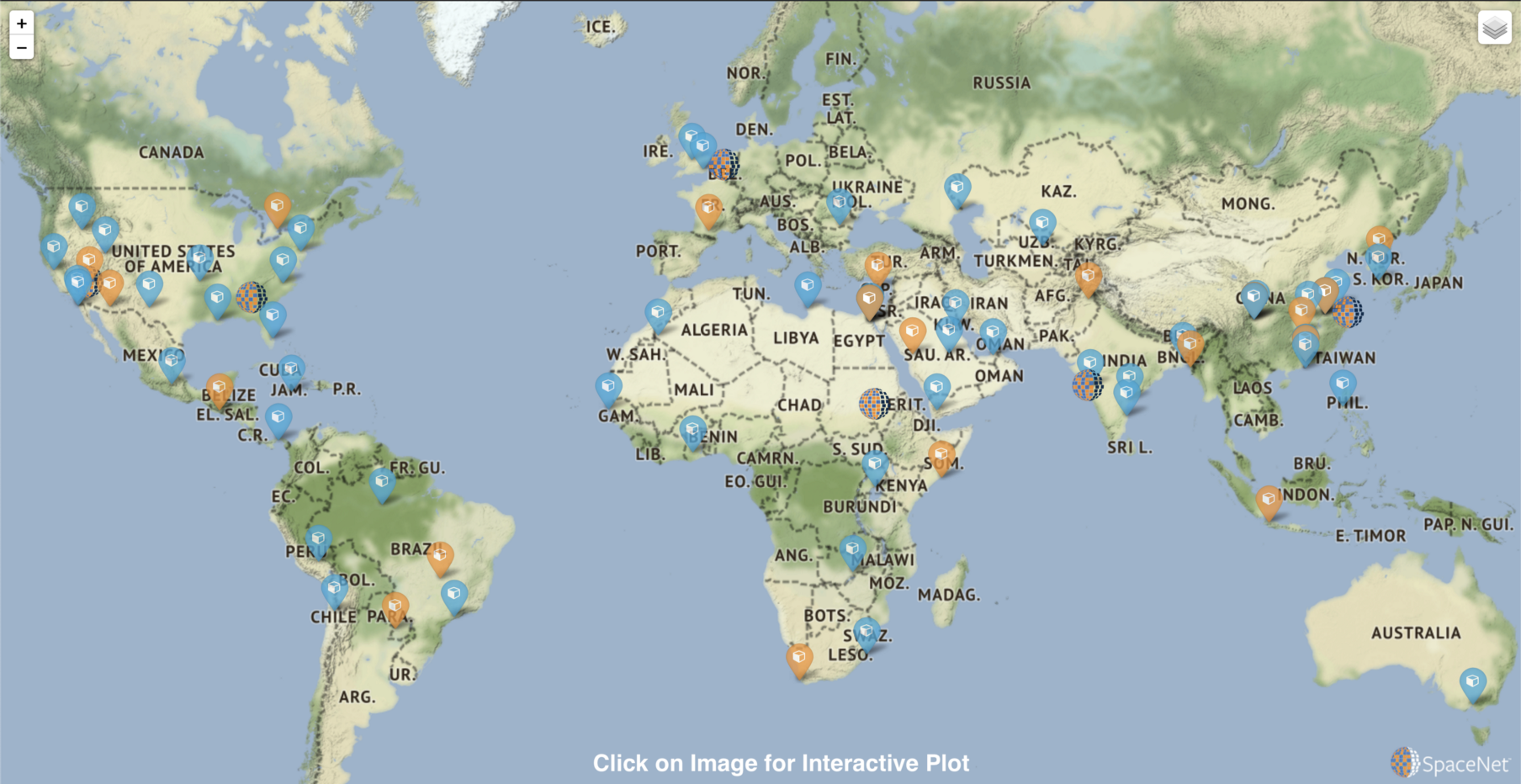
Satellite Images
Imagery consists of RBGA (red, green, blue, alpha) 8-bit electro-optical (EO) monthly mosaics from Planet’s Dove constellation at 4 meter resolution. For each of the Areas Of Interest (AOIs), the data cube extends for roughly two years, though it varies somewhat between AOIs. All images in a data cube are the same shape, though some data cubes have shape 1024 x 1024 pixels, while others have a shape of 1024 x 1023 pixels. Each image accordingly has an extent of roughly 18 square kilometers.
Images are provided in GeoTiff format, and there are two imagery data types:
images (training only) - Raw imagery, in
EPSG:3857projection.images_masked (training + testing) - Unusable portions of the image (usually due to cloud cover) have been masked out, in
EPSG:3857projection..
https://www.googleapis.com/download/storage/v1/b/kaggle-user-content/o/inbox%2F4101651%2F3e44366a047d980804c6bee26eaa3ea9%2Fudm-labels.png?generation=1605456767526756&alt=media" alt="">
Building Footprint Labels
For each monthly mosaic, the SpaceNet labeling team painstakingly outlined the footprint of each building. These GeoJSON vector labels permit tracking of individual building locations (i.e. addresses) over time, hence the moniker: SpaceNet 7 Urban Development Challenge. See Figure 4 for an example of the building footprint labels in one of the training cities.
While building masks are useful for visualization (and for training deep learning segmentation algorithms) the precise vector labels of the SpaceNet 7 dataset permit the assignment of a unique identifier (i.e. address) to each building. Matching these building addresses between time steps is a central theme of the SpaceNet 7 challenge. The figure below displays these building address changes.
https://www.googleapis.com/download/storage/v1/b/kaggle-user-content/o/inbox%2F4101651%2F88990ba121d3b550820b72caeebdbef6%2Flabels.png?generation=1605457001725966&alt=media" alt="">
The location and shape of known buildings are referred to as ‘ground truth’ in this document. Building footprint labels are distributed in multiple formats for the training set:
labels This folder contains the raw building footprint labels, along with unusable data mask (UDM) labels. UDMs are caused primarily by cloud cover. Building footprint labels will not overlap with UDM areas. In
EPSG:4326projection.UDM_masks This folder contains the UDM labels rendered as binary masks, in
EPSG:4326projection.labels_match This folder contains building footprints reprojected into the coordinate reference system (CRS) of the imagery (
EPSG:3857projection). Each building footprint is assigned a unique identifier (i.e. address) that remains consistent throughout the data cube.labels_match_pix This folder contains building footprints (with identifiers) in pixel coordinates of the image.
CSV format. All building footprints of the whole training set are described in a single CSV file. It is possible to work only with this file, you may or may not find additional value in using the other options listed above. This file has the following format:
filename,**id**,**geometry**
global_monthly_2020_01_mosaic_L15-1281E-1035N_5125_4049_13,42,"POLYGON ((1015.1 621.05, 1003.7 628.8, 1001.5 625.7, 1012.9 617.9, 1015.1 621.05))"


global_monthly_2018_12_mosaic_L15-0369E-1244N_1479_3214_13,0,POLYGON EMPTY


global_monthly_2019_08_mosaic_L15-0697E-0874N_2789_4694_13,10,"POLYGON ((897.11 102.88, 897.11 104.09, 900.29 121.02, 897.11 121.02, 897.11 125.59, 891.85 125.59, 891.85 102.88, 897.11 102.88), (900.29 113.97, 900.29 108.92, 897.11 108.92, 897.11 113.97, 900.29 113.97))"
```

***(The sample above contains 4 lin...
Cloud_satelite_maxar_dataset
- kaggle.com
zipUpdated Feb 22, 2025ShareFacebookTwitterEmailClick to copy linkLink copiedCitekishor datta gupta (2025). Cloud_satelite_maxar_dataset [Dataset]. https://www.kaggle.com/datasets/kishor1123/cloud-satelite-maxar-datasetzip(98887314 bytes)Available download formatsDataset updatedFeb 22, 2025Authorskishor datta guptaLicensehttp://opendatacommons.org/licenses/dbcl/1.0/http://opendatacommons.org/licenses/dbcl/1.0/
DescriptionCDD & CloudNet: A Benchmark Dataset & Model for Object Detection Performance
Overview
Welcome to the CloudNet repository. This project provides a cloud detection dataset and a pre-trained model designed to enhance object detection accuracy in remote sensing aerial images, particularly in challenging cloud-covered scenarios. The dataset comprises two classes: cloud and non-cloud images, sourced from the publicly available Maxar "Hurricane Ian" repository.
CloudNet Dataset
Description
The CloudNet dataset consists of cloud and non-cloud images, facilitating research in cloud detection for object detection in remote sensing imagery.
Dataset Structure
- cloud_images: Contains images with clouds.
- non_cloud_images: Includes images without clouds.
CloudNet Model
Description
The CloudNet model is a pre-trained model specifically designed for cloud detection in remote sensing imagery. It is trained on the CloudNet dataset and serves as a valuable tool for enhancing object detection accuracy in the presence of clouds.
Model Weights
You can download the pre-trained CloudNet model weights from the following link: CloudNet Model Weights
Citation
If you find the CloudNet dataset or model useful in your research, please cite our work using the following BibTeX entry:
@INPROCEEDINGS{10747011,
 author={Haque, Mohd Ariful and Rifat, Rakib Hossain and Kamal, Marufa and George, Roy and Gupta, Kishor Datta and Shujaee, Khalil},
 booktitle={2024 Fifth International Conference on Intelligent Data Science Technologies and Applications (IDSTA)},
 title={CDD & CloudNet: A Benchmark Dataset & Model for Object Detection Performance},
 year={2024},
 volume={},
 number={},
 pages={118-122},
 abstract={Aerial imagery obtained through remote sensing is extensively utilized across diverse industries, particularly for object detection applications where it has demonstrated considerable efficacy. However, clouds in these images can obstruct evaluation and detection tasks. This study therefore involved the compilation of a cloud dataset, which categorized images into two classes: those containing clouds and those without. These images were sourced from the publicly available Maxar ‘Hurricane Ian’ repository, which contains images from various natural events. We demonstrated the impact of cloud removal during pre-processing on object detection using this dataset and employed six CNN models, including a custom model, for cloud detection benchmarking. These models were used to detect objects in aerial images from two other events in the Maxar dataset. Our results show significant improvements in precision, recall, and F1-score for CNN models, along with optimized training times for object detection in the CloudNet+YOLO combination. The findings demonstrate the effectiveness of our approach in improving object detection accuracy and efficiency in remote sensing imagery, particularly in challenging cloud-covered scenarios.},
 keywords={Training;Industries;Accuracy;Object detection;Benchmark testing;Data science;Data models;Remote sensing;Cloud Detection;Dataset;Deep Learning;CNN;ResNet;Vgg16;DenseNet169;EfficientNet;MobileNet},
 doi={10.1109/IDSTA62194.2024.10747011},
 ISSN={},
 month={Sep.},}
License
The CloudNet dataset and model are released under the License.
- d
Monthly Fraction of Vegetation Cover of Canada from Medium Resolution...
- datasets.ai
- catalogue.arctic-sdi.org
- +2more
0, 21, 50, 52Updated Jan 16, 2024+ more versionsShareFacebookTwitterEmailClick to copy linkLink copiedCiteNatural Resources Canada | Ressources naturelles Canada (2024). Monthly Fraction of Vegetation Cover of Canada from Medium Resolution Satellite Imagery [Dataset]. https://datasets.ai/datasets/d7b177e0-274a-4be9-b69a-2030faf83c780, 52, 21, 50Available download formatsDataset updatedJan 16, 2024Dataset authored and provided byNatural Resources Canada | Ressources naturelles CanadaArea coveredCanadaDescriptionFCOVER corresponds to the amount of the ground surface that is covered by vegetation, including the understory, when viewed vertically (from nadir). FCOVER is an indicator of the spatial extent of vegetation independent of land cover class. It is a dimensionless quantity that varies from 0 to 1, and as an intrinsic property of the canopy, is not dependent on satellite observation conditions. This product consists of a national scale coverage (Canada) of monthly maps of FCOVER indicator during a growing season (May-June-July-August-September) at 20m resolution.
References:
L. Brown, R. Fernandes, N. Djamai, C. Meier, N. Gobron, H. Morris, C. Canisius, G. Bai, C. Lerebourg, C. Lanconelli, M. Clerici, J. Dash. Validation of baseline and modified Sentinel-2 Level 2 Prototype Processor leaf area index retrievals over the United States IISPRS J. Photogramm. Remote Sens., 175 (2021), pp. 71-87, https://doi.org/10.1016/j.isprsjprs.2021.02.020. https://www.sciencedirect.com/science/article/pii/S0924271621000617
Richard Fernandes, Luke Brown, Francis Canisius, Jadu Dash, Liming He, Gang Hong, Lucy Huang, Nhu Quynh Le, Camryn MacDougall, Courtney Meier, Patrick Osei Darko, Hemit Shah, Lynsay Spafford, Lixin Sun, 2023.
Validation of Simplified Level 2 Prototype Processor Sentinel-2 fraction of canopy cover, fraction of absorbed photosynthetically active radiation and leaf area index products over North American forests,
Remote Sensing of Environment, Volume 293, https://doi.org/10.1016/j.rse.2023.113600.
https://www.sciencedirect.com/science/article/pii/S0034425723001517
- h
overfitteam-geneva-satellite-images
- huggingface.co
Updated Nov 27, 2025ShareFacebookTwitterEmailClick to copy linkLink copiedCiteRaphael Attias (2025). overfitteam-geneva-satellite-images [Dataset]. https://huggingface.co/datasets/raphaelattias/overfitteam-geneva-satellite-imagesDataset updatedNov 27, 2025AuthorsRaphael AttiasLicenseMIT Licensehttps://opensource.org/licenses/MIT
License information was derived automaticallyDescriptionGeneva Satellite Images Dataset - Rooftop Segmentation
Satellite Image Segmentation Label
Dataset DescriptionThis dataset contains high-resolution satellite imagery of Geneva, Switzerland, with corresponding segmentation labels for rooftop detection. The dataset was originally created for research on automated solar panel installation assessment using deep learning. It was developed as part of a study published in the Journal of Physics: Conference… See the full description on the dataset page: https://huggingface.co/datasets/raphaelattias/overfitteam-geneva-satellite-images.
- Z
40-year monthly mean AVHRR GAC Land Surface Temperature data for the...
- data.niaid.nih.gov
- zenodo.org
Updated Feb 17, 2025ShareFacebookTwitterEmailClick to copy linkLink copiedCiteDupuis, Sonia; Wunderle, Stefan; Göttsche, Frank (2025). 40-year monthly mean AVHRR GAC Land Surface Temperature data for the Pan-Arctic region (Pan-Arctic AVHRR LST) [Dataset]. https://data.niaid.nih.gov/resources?id=zenodo_13361743Dataset updatedFeb 17, 2025Dataset provided byUniversity of Bern
Karlsruhe Institute of TechnologyAuthorsDupuis, Sonia; Wunderle, Stefan; Göttsche, FrankLicenseAttribution 4.0 (CC BY 4.0)https://creativecommons.org/licenses/by/4.0/
License information was derived automaticallyArea coveredArcticDescriptionThis data collection contains 40 years of monthly mean daytime AVHRR Global Area Coverage (GAC) land surface temperature (LST) data. This dataset covers the 1981-2020 perdiod and covers the whole globe above 50° latitude. The spatial extent of the dataset is the following : (-180°, 50°N) ; (180°, 90°N)
Dataset description:
The LST monthly mean composites are computed from daily daytime LST files, that were generated from the EUMETSAT AVHRR PyGAC FDR (https://navigator.eumetsat.int/product/EO:EUM:DAT:0862) as described in Dupuis et al. (2024). These daily LST files contain only cloud-free pixels and pixels with sufficient quality regarding satellite zenith angle and error margin from the radiative transfer modelling. The probabilistic cloud mask from the CLARA-A3 (https://navigator.eumetsat.int/product/EO:EUM:DAT:0874) dataset has been used. The LST monthly means do not contain any water masks, as potential users might have different requirements regarding water masks. The dataset has been validated against in situ data from the SURFRAD (https://gml.noaa.gov/grad/surfrad/overview.html), ARM (https://arm.gov/capabilities/observatories/nsa) and KIT (https://www.imk-asf.kit.edu/english/skl_stations.php) networks.
Data & File Overview:
Short description: AVHRR GAC LST daytime monthly mean composites: daily land surface temperature data are averaged to monthly composites for every afternoon and mid-day satellite (10 different satellites).
File List: This dataset contains monthly daytime land surface temperature (LST) data for the AVHRRs onboard NOAA and MetOp satellites.
Filename: Pan_Arctic_LST_avhrr_XXXXX_YYYYMM_DAY_***.nc, where XXXXX represents the satellite identifier, YYYYMM the monthly timestamp (YYYY=year, MM=month) and *** the timestamp of the file generation.
Relationship between files: Each file covers a one-month period and is recorded by a different satellite.
Satellite identifiers:AVN07 : NOAA 7AVN09 : NOAA 9AVN11 : NOAA 11AVN14 : NOAA 14AVN16 : NOAA 16AVN18 : NOAA 18AVN19 : NOAA 19AVMEA : MetOp-AAVMEB : MetOp-BAVMEC : MetOp-C
Data specific information:
The LST files are available as a gridded product in the WGS84 coordinate reference system and are distributed as NetCDF files. The dataset covers the pan-Arctic region (-180°, 90°, 180°, 50°) at a spatial resolution of 0.05°x0.05° pixel size.Each *.nc file contains one variable (LST) with three dimensions (time, lat, lon) and five coordinates (time, lat, lon, band and spatial_ref).
- spatial_ref (): stores the spatial information, such as the coordinate reference system (CRS) and WKT string.- time (time): stores the timestamp, here the month and the year of the monthly mean. The timestamp is the same for all pixels belonging to the same composite.- lat (lat): stores the latitude of each pixel- lon (lon): stores the longitude of each pixel- band (): empty inherited layer
Credit:
To use this data please cite this dataset and the respective journal publication:
Dupuis, S., Göttsche, F.-M., & Wunderle, S. (2024). Temporal stability of a new 40-year daily AVHRR land surface temperature dataset for the pan-Arctic region. The Cryosphere, 18(12), 6027-6059. https://doi.org/10.5194/tc-18-6027-2024
@Article{tc-18-6027-2024,
AUTHOR = {Dupuis, S. and G"ottsche, F.-M. and Wunderle, S.},
TITLE = {Temporal stability of a new 40-year daily AVHRR land surface temperature dataset for the pan-Arctic region},
JOURNAL = {The Cryosphere},
VOLUME = {18},
YEAR = {2024},
NUMBER = {12},
PAGES = {6027--6059},
URL = {https://tc.copernicus.org/articles/18/6027/2024/},
DOI = {10.5194/tc-18-6027-2024}
}
Information about funding sources that supported the collection of the data:Dr. Alfred Bretscher Fund (University of Bern)
Monthly fraction of absorbed photosynthetically active radiation absorbed of...
- ouvert.canada.ca
- data.urbandatacentre.ca
- +2more
geotif, html, wcs +1Updated Nov 13, 2025+ more versionsShareFacebookTwitterEmailClick to copy linkLink copiedCiteNatural Resources Canada (2025). Monthly fraction of absorbed photosynthetically active radiation absorbed of Canada from Medium Resolution Satellite Imagery [Dataset]. https://ouvert.canada.ca/data/dataset/d708877c-56b8-4255-99e3-3c4abc54597dhtml, wms, wcs, geotifAvailable download formatsDataset updatedNov 13, 2025LicenseOpen Government Licence - Canada 2.0https://open.canada.ca/en/open-government-licence-canada
License information was derived automaticallyArea coveredCanadaDescriptionFraction of absorbed photosynthetically active radiation (fAPAR) quantified the absorbed by green foliage. fAPAR has been identified by the Global Climate Observing System as an essential climate variable required for ecosystem, weather and climate modelling and monitoring. This product consists of a national scale coverage (Canada) of monthly maps of fAPAR during a growing season (May-June-July-August-September) at 20m resolution. References: L. Brown, R. Fernandes, N. Djamai, C. Meier, N. Gobron, H. Morris, C. Canisius, G. Bai, C. Lerebourg, C. Lanconelli, M. Clerici, J. Dash. Validation of baseline and modified Sentinel-2 Level 2 Prototype Processor leaf area index retrievals over the United States IISPRS J. Photogramm. Remote Sens., 175 (2021), pp. 71-87, https://doi.org/10.1016/j.isprsjprs.2021.02.020. https://www.sciencedirect.com/science/article/pii/S0924271621000617 Richard Fernandes, Luke Brown, Francis Canisius, Jadu Dash, Liming He, Gang Hong, Lucy Huang, Nhu Quynh Le, Camryn MacDougall, Courtney Meier, Patrick Osei Darko, Hemit Shah, Lynsay Spafford, Lixin Sun, 2023. Validation of Simplified Level 2 Prototype Processor Sentinel-2 fraction of canopy cover, fraction of absorbed photosynthetically active radiation and leaf area index products over North American forests, Remote Sensing of Environment, Volume 293, https://doi.org/10.1016/j.rse.2023.113600. https://www.sciencedirect.com/science/article/pii/S0034425723001517
Bing Maps Aerial
- noveladata.com
- hub.arcgis.com
Updated Feb 19, 2012ShareFacebookTwitterEmailClick to copy linkLink copiedCiteesri_en (2012). Bing Maps Aerial [Dataset]. https://www.noveladata.com/maps/8651e4d585654f6b955564efe44d04e5Dataset updatedFeb 19, 2012Authorsesri_enArea coveredEarthDescriptionThis web map contains the Bing Maps aerial imagery web mapping service, which offers worldwide orthographic aerial and satellite imagery. Coverage varies by region, with the most detailed coverage in the USA and United Kingdom. Coverage in different areas within a country also varies in detail based on the availability of imagery for that region. Bing Maps is continuously adding imagery in new areas and updating coverage in areas of existing coverage. This map does not include bird's eye imagery. Information regarding monthly updates of imagery coverage are available on the Bing Community blog. Post a comment to the Bing Community blog to request imagery vintage information for a specific area.Tip: The Bing Maps Aerial service is one of the basemaps used in the ArcGIS.com map viewer and ArcGIS Explorer Online. Simply click one of those links to launch the interactive application of your choice, and then choose Bing Maps Aerial from the Basemap control to start browsing! You'll also find this service in the Basemap gallery in ArcGIS Explorer Desktop and ArcGIS Desktop 10.If you need information on how to access Bing Maps, information is available in the ArcGIS Online Content Resource Center.See Bing Maps (http://www.bing.com/maps) for more information about the Bing Maps mapping system, terms of use, and a complete list of data suppliers.
- d
505 Economics: Monthly National GDP Dataset for Germany (quick, frequent and...
- datarade.ai
Updated May 1, 2021+ more versionsShareFacebookTwitterEmailClick to copy linkLink copiedCite505 Economics (2021). 505 Economics: Monthly National GDP Dataset for Germany (quick, frequent and precise) [Dataset]. https://datarade.ai/data-products/505-economics-monthly-national-gdp-dataset-for-germany-quick-frequent-and-precise-505-economics.json, .xml, .csv, .xlsAvailable download formatsDataset updatedMay 1, 2021Dataset authored and provided by505 EconomicsArea coveredGermanyDescription505 Economics is on a mission to make academic economics accessible. We've developed the first monthly sub-national GDP data for EU and UK regions from January 2015 onwards.
Our GDP dataset uses luminosity as a proxy for GDP. The brighter a place, the more economic activity that place tends to have.
We produce the data using high-resolution night time satellite imagery and Artificial Intelligence.
This builds on our academic research at the London School of Economics, and we're producing the dataset in collaboration with the European Space Agency BIC UK.
We have published peer-reviewed academic articles on the usage of luminosity as an accurate proxy for GDP.
Key features: - Frequent: Data is provided every month from January 2015. This is more frequent than quarterly official datasets. - Timely: Data is provided with a three week lag (i.e. the data for January 2021 was published at the end of February 2021). This is substantially quicker than the 3-6 month lag of official datasets. - Accurate: Our dataset uses Deep Learning to maximise accuracy (RMSE 1.2%).
The dataset can be used by:
- Financial services - to get an indication of national-level GDP before official GDP statistics are released
- Governments and policy makers - to monitor the performance of economies, to measure the impact of policies, and to get a real-time indication of economic activity.
- Engineering companies - to monitor and evaluate the national impact of infrastructure projects
- Consultancies - to forecast the national impact of specific projects, to retrospectively monitor and evaluate the localised impact of existing projects
- Economics firms - to create macro forecasts at the national, to assess the impact of policy interventions.
- Academia / Think Tanks - to conduct novel research with more-frequent GDP data than is available from official sources. E.g. our dataset can be used to measure the impact of localised COVID-19 lockdowns.
We have created this dataset for the UK, Switzerland and 28 EU Countries.
Imagery Hybrid
- hub.arcgis.com
- data.buncombecounty.org
- +1more
Updated Feb 14, 2025ShareFacebookTwitterEmailClick to copy linkLink copiedCiteEsri (2025). Imagery Hybrid [Dataset]. https://hub.arcgis.com/maps/0d17ba68a8f64c278e7e2e7864e1069dDataset updatedFeb 14, 2025Area coveredDescriptionThe Imagery Hybrid (US Edition) web map provides a world reference map with highways, major roads, minor roads, railways, water features, cities, parks, landmarks, and administrative boundaries overlaid on one meter or better satellite and aerial imagery in many parts of the world and lower resolution satellite imagery worldwide.This basemap is available in the United States Vector Basemaps gallery and uses the Hybrid Reference (US Edition) vector tile layer and World Imagery.The vector tile layer in this web map is built using the same data sources used for other Esri Vector Basemaps. For details on data sources contributed by the GIS community, view the map of Community Maps Basemap Contributors. Esri Vector Basemaps and World Imagery are updated monthly.Use this MapThis map is designed to be used as a basemap for overlaying other layers of information or as a stand-alone reference map. You can add layers to this web map and save as your own map. If you like, you can add this web map to a custom basemap gallery for others in your organization to use in creating web maps. If you would like to add this map as a layer in other maps you are creating, you may use the tile layers referenced in this map.
New Zealand 10m Satellite Imagery (2022-2023)
- data.linz.govt.nz
dwg with geojpeg +8+ more versionsShareFacebookTwitterEmailClick to copy linkLink copiedCiteLand Information New Zealand, New Zealand 10m Satellite Imagery (2022-2023) [Dataset]. https://data.linz.govt.nz/layer/116323-new-zealand-10m-satellite-imagery-2022-2023/jpeg2000 lossless, geojpeg, jpeg2000, kea, geotiff, dwg with geojpeg, pdf, erdas imagine, kmlAvailable download formatsLicensehttps://data.linz.govt.nz/license/attribution-4-0-international/https://data.linz.govt.nz/license/attribution-4-0-international/
Area coveredDescriptionThis dataset provides a seamless cloud-free 10m resolution satellite imagery layer of the New Zealand mainland and offshore islands.
The imagery was captured by the European Space Agency Sentinel-2 satellites between September 2022 - April 2023.
Data comprises: • 450 ortho-rectified RGB GeoTIFF images in NZTM projection, tiled into the LINZ Standard 1:50000 tile layout. • Satellite sensors: ESA Sentinel-2A and Sentinel-2B • Acquisition dates: September 2022 - April 2023 • Spectral resolution: R, G, B • Spatial resolution: 10 meters • Radiometric resolution: 8-bits (downsampled from 12-bits)
This is a visual product only. The data has been downsampled from 12-bits to 8-bits, and the original values of the images have been modified for visualisation purposes.
Also available on: • Basemaps • NZ Imagery - Registry of Open Data on AWS
- m
MassGIS Data: 2023 Aerial Imagery
- mass.gov
ShareFacebookTwitterEmailClick to copy linkLink copiedCiteMassGIS (Bureau of Geographic Information), MassGIS Data: 2023 Aerial Imagery [Dataset]. https://www.mass.gov/info-details/massgis-data-2023-aerial-imageryDataset authored and provided byMassGIS (Bureau of Geographic Information)Area coveredMassachusettsDescriptionSpring 2023
Imagery Hybrid
- open-data-pittsylvania.hub.arcgis.com
- share-open-data-crawfordcountypa.opendata.arcgis.com
Updated Nov 14, 2015+ more versionsShareFacebookTwitterEmailClick to copy linkLink copiedCiteEsri (2015). Imagery Hybrid [Dataset]. https://open-data-pittsylvania.hub.arcgis.com/maps/28f49811a6974659988fd279de5ce39fDataset updatedNov 14, 2015Area coveredDescriptionThe Imagery Hybrid (World Edition) web map provides a world reference map with highways, major roads, minor roads, railways, water features, cities, parks, landmarks, and administrative boundaries overlaid on one meter or better satellite and aerial imagery in many parts of the world and lower resolution satellite imagery worldwide.This basemap uses the Hybrid Reference Layer vector tile layer and World Imagery. The vector tile layer in this web map is built using the same data sources used for other Esri Vector Basemaps. For details on data sources contributed by the GIS community, view the map of Community Maps Basemap Contributors. Esri Vector Basemaps and World Imagery are updated monthly.Use this MapThis map is designed to be used as a basemap for overlaying other layers of information or as a stand-alone reference map. You can add layers to this web map and save as your own map. If you like, you can add this web map to a custom basemap gallery for others in your organization to use in creating web maps. If you would like to add this map as a layer in other maps you are creating, you may use the tile layer item referenced in this map.
- d
Data from: Time Series of Aerial Imagery from Small Unmanned Aircraft...
- catalog.data.gov
- data.usgs.gov
- +1more
Updated Oct 22, 2025+ more versionsShareFacebookTwitterEmailClick to copy linkLink copiedCiteU.S. Geological Survey (2025). Time Series of Aerial Imagery from Small Unmanned Aircraft Systems and Associated Ground Control Points: Madeira Beach, Florida, July 2017 to June 2018 (Aerial Imagery) [Dataset]. https://catalog.data.gov/dataset/time-series-of-aerial-imagery-from-small-unmanned-aircraft-systems-and-associated-ground-c-3a619Dataset updatedOct 22, 2025Dataset provided byU.S. Geological SurveyArea coveredMadeira Beach, FloridaDescriptionAerial imagery acquired with a small unmanned aircraft system (sUAS), in conjunction with surveyed ground control points (GCPs) visible in the imagery, can be processed with structure-from-motion (SfM) photogrammetry techniques to produce high-resolution orthomosaics, three-dimensional (3D) point clouds and digital elevation models (DEMs). This dataset, prepared by the U.S. Geological Survey (USGS) St. Petersburg Coastal and Marine Science Center (SPCMSC), provides UAS survey data consisting of aerial imagery and GCP positions and elevations collected at Madeira Beach, Florida, monthly from July 2017 to June 2018 in order to observe seasonal and storm-induced changes in beach topography.
SpaceNet 7 Change Detection Chips and Masks
- kaggle.com
zipUpdated Dec 24, 2020ShareFacebookTwitterEmailClick to copy linkLink copiedCiteA Merii (2020). SpaceNet 7 Change Detection Chips and Masks [Dataset]. https://www.kaggle.com/amerii/spacenet-7-change-detection-chips-and-maskszip(0 bytes)Available download formatsDataset updatedDec 24, 2020AuthorsA MeriiLicenseAttribution-NonCommercial-ShareAlike 4.0 (CC BY-NC-SA 4.0)https://creativecommons.org/licenses/by-nc-sa/4.0/
License information was derived automaticallyDescriptionContext
This dataset is based on the original SpaceNet 7 dataset, with a few modifications.
Content
The original dataset consisted of Planet satellite imagery mosaics, which includes 24 images (one per month) covering ~100 unique geographies. The original dataset will comprised over 40,000 square kilometers of imagery and exhaustive polygon labels of building footprints in the imagery, totaling over 10 million individual annotations.
This dataset builds upon the original dataset, such that each image is segmented into 64 x 64 chips, in order to make it easier to build a model for.
https://www.googleapis.com/download/storage/v1/b/kaggle-user-content/o/inbox%2F4101651%2F66851650dbfb7017f1c5717af16cea3c%2Fchips.png?generation=1607947381793575&alt=media" alt="">
The images also compare the changes that between each image of each month, such that an image taken in month 1 is compared with the image take in month 2, 3, ... 24. This is done by taking the cartesian product of the differences between each image. For more information on how this is done check out the following notebook.
The differences between the images are captured in the output mask, and the 2 images being compared are stacked. Which means that our input images have dimensions of 64 x 64 x 6, and our output mask has dimensions 64 x 64 x 1. The reason our input images have 6 dimensions is because as mentioned earlier, they are 2 images stacked together. See image below for more details:
https://www.googleapis.com/download/storage/v1/b/kaggle-user-content/o/inbox%2F4101651%2F9cdcf8481d8d81b6d3fed072cea89586%2Fdifference.png?generation=1607947852597860&alt=media" alt="">
The image above shows the masks for each of the original satellite images and what the difference between the 2 looks like. For more information on how the original data was explored check out this notebook.
Data Structure
The data is structured as follows:
chip_dataset
└── change_detection
└── fname
├── chips
│ └── year1_month1_year2_month2
│ └── global_monthly_year1_month1_year2_month2_chip_x###_y###_fname.tif
└── masks
└── year1_month1_year2_month2
└── global_monthly_year1_month1_year2_month2_chip_x###_y###_fname_blank.tifThe
_blankin the mask chips, indicates whether the mask is a blank mask or not.For more information on how the data was structured and augmented check out the following notebook.
Acknowledgements
All credit goes to the team at SpaceNet for collecting and annotating and formatting the original dataset.
- n
Heard Island WorldView-1 Image (23 March 2008) orthorectification
- access.earthdata.nasa.gov
- data.aad.gov.au
- +2more
Updated Apr 8, 2019ShareFacebookTwitterEmailClick to copy linkLink copiedCite(2019). Heard Island WorldView-1 Image (23 March 2008) orthorectification [Dataset]. https://access.earthdata.nasa.gov/collections/C1214308645-AU_AADCDataset updatedApr 8, 2019Time period coveredMar 23, 2008Area coveredDescriptionThe WorldView-1 image of Heard Island (23 March 2008) that was purchased by the Australian Antarctic Division (AAD) and the University of Tasmania (UTAS) in June 2008 has to be geometrically corrected to match the Quickbird and IKONOS imagery in the Australian Antarctic Data Centre (AADC) satellite image catalogue. In addition, the WorldView-1 imagery contains two separate image strips that cover the whole island. These strips were acquired at slightly different times from different angles during the satellite overpass. The discrepancy in acquisition angle has resulted in a geometric offset between the two image strips. These two image strips were orthorectified with a 10 m RADARSAT DEM (2002). The orthorectified images were then merged into a single image mosaic for the whole island.
This work was completed as part of ASAC project 2939 (ASAC_2939).
- D
Remote Sensing-Based Extension of GRDC River Discharge Time Series
- darus.uni-stuttgart.de
Updated Feb 9, 2024ShareFacebookTwitterEmailClick to copy linkLink copiedCiteOmid Elmi; Mohammad J. Tourian; Peyman Saemian; Nico Sneeuw (2024). Remote Sensing-Based Extension of GRDC River Discharge Time Series [Dataset]. http://doi.org/10.18419/DARUS-3558CroissantCroissant is a format for machine-learning datasets. Learn more about this at mlcommons.org/croissant.Unique identifierhttps://doi.org/10.18419/DARUS-3558Dataset updatedFeb 9, 2024Dataset provided byDaRUSAuthorsOmid Elmi; Mohammad J. Tourian; Peyman Saemian; Nico SneeuwLicenseAttribution 4.0 (CC BY 4.0)https://creativecommons.org/licenses/by/4.0/
License information was derived automaticallyDescriptionThe quantification of river discharge is essential for understanding global freshwater dynamics. However, the Global Runoff Data Center (GRDC) dataset has faced a decline in the number of active gauges since the 1980s, leaving only 14% of gauges active as of 2020. We develop the Remote Sensing-based Extension for the GRDC (RSEG) dataset that can ingest legacy gauge discharge and remote sensing observations. We employ a stochastic nonparametric mapping algorithm to extend the monthly discharge time series for inactive GRDC stations, benefiting from satellite imagery- and altimetry-derived river width and water height observations. After a rigorous quality assessment of our estimated discharge, involving statistical validation, tests and visual inspection, results in the salvation of discharge records for 3377 out of 6015 GRDC stations with an average monthly discharge exceeding 10 m³/s. The RSEG dataset regains monitoring capability for 83% of global river discharge measured by GRDC stations, equivalent to 7895 km³/month, providing valuable insight into Earth's river systems with comprehensive and up-to-date information.
Land Cover from Aerial Imagery - LandCover.ai
- kaggle.com
zipUpdated May 3, 2024ShareFacebookTwitterEmailClick to copy linkLink copiedCiteAleTBM (2024). Land Cover from Aerial Imagery - LandCover.ai [Dataset]. https://www.kaggle.com/datasets/aletbm/land-cover-from-aerial-imagery-landcover-aizip(2559310055 bytes)Available download formatsDataset updatedMay 3, 2024AuthorsAleTBMLicenseAttribution-NonCommercial-ShareAlike 4.0 (CC BY-NC-SA 4.0)https://creativecommons.org/licenses/by-nc-sa/4.0/
License information was derived automaticallyDescriptionDataset features
- land cover from Poland, Central Europe 1
- three spectral bands - RGB
- 33 orthophotos with 25 cm per pixel resolution (~9000x9500 px)
- 8 orthophotos with 50 cm per pixel resolution (~4200x4700 px)
- total area of 216.27 km2
Dataset format
- rasters are three-channel GeoTiffs with EPSG:2180 spatial reference system
- masks are single-channel GeoTiffs with EPSG:2180 spatial reference system
Reproduce and compare
We provide split.py to split images into 512x512 pieces, and following files: train.txt, val.txt and test.txt containing lists of pieces used for training, validation and testing respectively.
Annotations
- classes: building (1), woodland (2), water(3), road(4)
- areas: 1.85 km2 of buildings, 72.02 km2 of woodlands, 13.15 km2 of water, 3.5 km2 of roads
Citation
@InProceedings{Boguszewski_2021_CVPR,
author = {Boguszewski, Adrian and Batorski, Dominik and Ziemba-Jankowska, Natalia and Dziedzic, Tomasz and Zambrzycka, Anna},
title = {LandCover.ai: Dataset for Automatic Mapping of Buildings, Woodlands, Water and Roads from Aerial Imagery},
booktitle = {Proceedings of the IEEE/CVF Conference on Computer Vision and Pattern Recognition (CVPR) Workshops},
month = {June},
year = {2021},
pages = {1102-1110}
}
License
This dataset is licensed under a Creative Commons Attribution-NonCommercial-ShareAlike 4.0 International License.
Contact
If you encounter any problem or have any feedback, please contact landcoverai@linuxpolska.pl
- e
REDIAM. WMS AQUA MODIS satellite image series. Chlorophyll-with monthly...
- data.europa.eu
wmsUpdated Oct 6, 2022ShareFacebookTwitterEmailClick to copy linkLink copiedCite(2022). REDIAM. WMS AQUA MODIS satellite image series. Chlorophyll-with monthly filtered averages: Year 2007. 1 100 m. Atlantic Ocean and Alboran Sea REDIAM. WMS AQUA MODIS satellite image series. Chlorophyll-with monthly filtered averages: Year 2007. 1 100 m. Atlantic Ocean and Alboran Sea [Dataset]. https://data.europa.eu/data/datasets/12ed673fef4dedaafc25ac5df944a6ed11cfbd82?locale=enwmsAvailable download formatsDataset updatedOct 6, 2022Area coveredAlboran Sea, Atlantic OceanDescriptionNode of the Environmental Information Network of Andalusia. Junta de Andalucia. Monthly average AQUA MODIS satellite imagery of chlorophyll-a for the year 2007. Spatial resolution 1 100 m. Area Atlantic Ocean and Alboran Sea. In ETRS89 UTM spindle 30. In order to obtain monthly images of chlorophyll (mg/cm³) on the Andalusian coast, a parameter that allows the estimation of the concentration of phytoplankton and indirectly of the biological activity, in addition to being used as a tool for monitoring the eutrophication processes in the marine environment. Ministry of Environment and Spatial Planning. Junta de Andalucia. Node of the Environmental Information Network of Andalusia. Junta de Andalucia. Integrated into the Spatial Data Infrastructure of Andalusia, following the guidelines of the Andalusian Cartographic System.
FacebookTwitterEmailData from: Monthly Leaf Area Index of Canada from Medium Resolution Satellite Imagery
Leaf area index (LAI) quantified the density of vegetation irrespective of land cover. LAI quantifies the total foliage surface area per ground surface area. LAI has been identified by the Global Climate Observing System as an essential climate variable required for ecosystem, weather and climate modelling and monitoring. This product consists of a national scale coverage (Canada) of monthly maps of the maximum LAI during a growing season (May-June-july-August-September) at 20m. References: L. Brown, R. Fernandes, N. Djamai, C. Meier, N. Gobron, H. Morris, C. Canisius, G. Bai, C. Lerebourg, C. Lanconelli, M. Clerici, J. Dash. Validation of baseline and modified Sentinel-2 Level 2 Prototype Processor leaf area index retrievals over the United States IISPRS J. Photogramm. Remote Sens., 175 (2021), pp. 71-87, https://doi.org/10.1016/j.isprsjprs.2021.02.020. https://www.sciencedirect.com/science/article/pii/S0924271621000617 Richard Fernandes, Luke Brown, Francis Canisius, Jadu Dash, Liming He, Gang Hong, Lucy Huang, Nhu Quynh Le, Camryn MacDougall, Courtney Meier, Patrick Osei Darko, Hemit Shah, Lynsay Spafford, Lixin Sun, 2023. Validation of Simplified Level 2 Prototype Processor Sentinel-2 fraction of canopy cover, fraction of absorbed photosynthetically active radiation and leaf area index products over North American forests, Remote Sensing of Environment, Volume 293, https://doi.org/10.1016/j.rse.2023.113600. https://www.sciencedirect.com/science/article/pii/S0034425723001517