- d
Replication Data for: Geo-Nested Analysis: Mixed-Methods Research with...
- search.dataone.org
- dataverse.harvard.edu
Updated Nov 21, 2023 Share
Share Facebook
 Twitter
 EmailClick to copy linkLink copiedCiteHarbers, Imke; Ingram, Matthew C (2023). Replication Data for: Geo-Nested Analysis: Mixed-Methods Research with Spatially Dependent Data [Dataset]. http://doi.org/10.7910/DVN/HRLHA4Unique identifierhttps://doi.org/10.7910/DVN/HRLHA4Dataset updatedNov 21, 2023Dataset provided byHarvard DataverseAuthorsHarbers, Imke; Ingram, Matthew CDescription
Replication code and sample data used for above mentioned publication in Political Analysis.
- h
subset-0-fixed-nested-data
- huggingface.co
Updated Sep 15, 2025ShareFacebookTwitterEmailClick to copy linkLink copiedCiteSraghvi Anchaliya (2025). subset-0-fixed-nested-data [Dataset]. https://huggingface.co/datasets/Sraghvi/subset-0-fixed-nested-dataDataset updatedSep 15, 2025AuthorsSraghvi AnchaliyaDescriptionSraghvi/subset-0-fixed-nested-data dataset hosted on Hugging Face and contributed by the HF Datasets community
Scalable Integration and Querying of Nested Biological Data
- figshare.com
txtUpdated Sep 3, 2021ShareFacebookTwitterEmailClick to copy linkLink copiedCiteJaclyn Smith (2021). Scalable Integration and Querying of Nested Biological Data [Dataset]. http://doi.org/10.6084/m9.figshare.13363502.v1txtAvailable download formatsUnique identifierhttps://doi.org/10.6084/m9.figshare.13363502.v1Dataset updatedSep 3, 2021AuthorsJaclyn SmithLicenseMIT Licensehttps://opensource.org/licenses/MIT
License information was derived automaticallyDescriptionRaw runtimes for the program performance for burden based analyses, driver gene analysis, and clinical exploratory programs.
- R
Nested Object Detection Dataset
- universe.roboflow.com
zipUpdated Dec 5, 2023ShareFacebookTwitterEmailClick to copy linkLink copiedCiteKumaraguru College Of Technology (2023). Nested Object Detection Dataset [Dataset]. https://universe.roboflow.com/kumaraguru-college-of-technology-gfdmc/nested-object-detectionzipAvailable download formatsDataset updatedDec 5, 2023Dataset authored and provided byKumaraguru College Of TechnologyLicenseAttribution 4.0 (CC BY 4.0)https://creativecommons.org/licenses/by/4.0/
License information was derived automaticallyVariables measuredMotorcycle Pedestrian Bounding BoxesDescriptionNested Object Detection
## Overview

Nested Object Detection is a dataset for object detection tasks - it contains Motorcycle Pedestrian annotations for 373 images.

## Getting Started

You can download this dataset for use within your own projects, or fork it into a workspace on Roboflow to create your own model.

  ## License

  This dataset is available under the [CC BY 4.0 license](https://creativecommons.org/licenses/CC BY 4.0).
Data from: Scalable Analysis of Multi-Modal Biomedical Data
- figshare.com
txtUpdated Sep 3, 2021ShareFacebookTwitterEmailClick to copy linkLink copiedCiteJaclyn Smith (2021). Scalable Analysis of Multi-Modal Biomedical Data [Dataset]. http://doi.org/10.6084/m9.figshare.13363502.v4txtAvailable download formatsUnique identifierhttps://doi.org/10.6084/m9.figshare.13363502.v4Dataset updatedSep 3, 2021AuthorsJaclyn SmithLicenseMIT Licensehttps://opensource.org/licenses/MIT
License information was derived automaticallyDescriptionRaw runtimes for the program performance for burden based analyses, driver gene analysis, and clinical exploratory programs. Also includes runtimes for skew and scalability experiments.
- H
Data from: Assessing Differences between Nested and Cross-Classified...
- dataverse.harvard.edu
- search.dataone.org
Updated Jul 23, 2020ShareFacebookTwitterEmailClick to copy linkLink copiedCiteDavid Melamed (2020). Assessing Differences between Nested and Cross-Classified Hierarchical Models [Dataset]. http://doi.org/10.7910/DVN/LF2Q8PCroissantCroissant is a format for machine-learning datasets. Learn more about this at mlcommons.org/croissant.Unique identifierhttps://doi.org/10.7910/DVN/LF2Q8PDataset updatedJul 23, 2020Dataset provided byHarvard DataverseAuthorsDavid MelamedLicenseCC0 1.0 Universal Public Domain Dedicationhttps://creativecommons.org/publicdomain/zero/1.0/
License information was derived automaticallyDescriptionR scripts to replicate the experiments in the paper.
- f
Data from: Bayesian Tree-Structured Two-Level Clustering for Nested Data...
- tandf.figshare.com
zipUpdated May 31, 2024ShareFacebookTwitterEmailClick to copy linkLink copiedCiteYinqiao Yan; Xiangyu Luo (2024). Bayesian Tree-Structured Two-Level Clustering for Nested Data Analysis [Dataset]. http://doi.org/10.6084/m9.figshare.21263192.v2zipAvailable download formatsUnique identifierhttps://doi.org/10.6084/m9.figshare.21263192.v2Dataset updatedMay 31, 2024Dataset provided byTaylor & FrancisAuthorsYinqiao Yan; Xiangyu LuoLicenseAttribution 4.0 (CC BY 4.0)https://creativecommons.org/licenses/by/4.0/
License information was derived automaticallyDescriptionData integration plays a crucial role in the era of big data. The nested data are a combined set of observations from multiple sources and exhibit heterogeneity both at the source level and at the observational level. The complex nature makes it challenging to reasonably visualize and jointly analyze the nested data. In this article, we present a nonparametric Bayesian model to implement the tree-structured two-level clustering for nested data analysis. The two-level clustering is used to tease out the heterogeneity existing in the sources and observations, while a tree-structured prior is employed to model the latent hierarchy for clusters at the observational level. The proposed Bayesian model is flexible as it does not require an exact specification of cluster numbers or tree width/depth, and it can automatically learn the underlying tree structures among clusters of observations, thus, offering an insightful visualization of the nested data. We further provide a rigorous posterior sampling scheme via the partially collapsed Gibbs sampler and show the performance of the proposed method using simulation studies. Finally, the applications to two different types of nested data (multi-source image data and multi-subject single-cell expression data) demonstrate the advantages of the proposed Bayesian method. Supplementary materials for this article are available online.
- d
Massachusetts Nested Subbasins
- catalog.data.gov
- data.usgs.gov
- +3more
Updated Oct 8, 2025ShareFacebookTwitterEmailClick to copy linkLink copiedCiteU.S. Geological Survey (2025). Massachusetts Nested Subbasins [Dataset]. https://catalog.data.gov/dataset/massachusetts-nested-subbasinsDataset updatedOct 8, 2025Area coveredMassachusettsDescriptionImpervious surfaces such as paved roads, parking lots, and building roofs can affect the natural streamflow patterns and ecosystems of nearby streams. This data set summarizes the percent of impervious surface for subbasins in Massachusetts using a newly available statewide 1-m binary raster dataset of impervious surface for 2005. Subbasin boundaries include the entire upstream drainage area and are nested such that polygons for headwater basins and tributary streams will overlap with basin polygons delineated further downstream. This is one of three data layers in this data series publication.
- d
Virginia Key nest survey data
- catalog.data.gov
- fisheries.noaa.gov
Updated May 1, 2024ShareFacebookTwitterEmailClick to copy linkLink copiedCite(Point of Contact, Custodian) (2024). Virginia Key nest survey data [Dataset]. https://catalog.data.gov/dataset/virginia-key-nest-survey-dataDataset updatedMay 1, 2024Dataset provided by(Point of Contact, Custodian)Area coveredVirginia KeyDescriptionSeasonal (May-Sep) daily surveys are conducted on Virginia Key, FL to document marine turtle nesting activity.
Hawaii ESI: NESTS (Nest Points)
- fisheries.noaa.gov
- catalog.data.gov
- +1more
Updated Nov 1, 2001+ more versionsShareFacebookTwitterEmailClick to copy linkLink copiedCiteOffice of Response and Restoration (2001). Hawaii ESI: NESTS (Nest Points) [Dataset]. https://www.fisheries.noaa.gov/inport/item/40330esri file geodatabaseAvailable download formatsDataset updatedNov 1, 2001Dataset provided byOffice of Response and RestorationTime period covered2000 - 2001Area coveredDescriptionThis data set contains sensitive biological resource data for seabird nesting colonies in coastal Hawaii. Vector points in this data set represent locations of seabird colonies. Species-specific abundance, seasonality, status, life history, and source information are stored in relational data tables (described below) designed to be used in conjunction with this spatial data layer. This data set...
- Z
Supplementary data for Nested sampling cross-checks using order statistics
- data.niaid.nih.gov
Updated Jul 24, 2020ShareFacebookTwitterEmailClick to copy linkLink copiedCiteFowlie, Andrew; Su, Liangliang; Handley, Will (2020). Supplementary data for Nested sampling cross-checks using order statistics [Dataset]. https://data.niaid.nih.gov/resources?id=zenodo_3958748Dataset updatedJul 24, 2020Dataset provided byUniversity of Cambridge
Nanjing Normal UniversityAuthorsFowlie, Andrew; Su, Liangliang; Handley, WillLicenseAttribution 4.0 (CC BY 4.0)https://creativecommons.org/licenses/by/4.0/
License information was derived automaticallyDescriptionThis is the raw data for tables 1 and 2 in Nested sampling cross-checks using order statistics. The file names for the MultiNest results in table 1 are:
MN_{PROBLEM}_{number of dimensions}d_efr_{MultiNest efr parameter}.txt
The file names for the PolyChord results in table 2 are:
PC_{PROBLEM}_{number of dimensions}d_nr_{PolyChord number of repeats}.txt
where PROBLEM specifies one of four test functions described in Appendix C
gaussian = Gaussian
mixture = Gaussian-log-gamma mixture
rosenbrock = Rosenbrock function
shells = Gaussian shells
Each file contains 100 rows (corresponding to 100 runs) and 8 columns
log evidence
error log evidence
KS statistic from test on all iterations
number of iterations
p-value from all iterations
Greatest KS statistic from tests on chunks of iterations
Iteration of start of chunk at which greatest KS statistic occurred
Bonferroni corrected p-value from greatest KS statistic from tests on chunks of iterations
- 4
Code for manuscript Bayesian Covariance Structure Modeling of Multi-Way...
- data.4tu.nl
zipUpdated Jun 24, 2024ShareFacebookTwitterEmailClick to copy linkLink copiedCiteStef Baas (2024). Code for manuscript Bayesian Covariance Structure Modeling of Multi-Way Nested Data [Dataset]. http://doi.org/10.4121/3a23da61-15bd-417f-8295-440acd615bf7.v1zipAvailable download formatsUnique identifierhttps://doi.org/10.4121/3a23da61-15bd-417f-8295-440acd615bf7.v1Dataset updatedJun 24, 2024Dataset provided by4TU.ResearchDataAuthorsStef BaasLicenseAttribution-NonCommercial-ShareAlike 4.0 (CC BY-NC-SA 4.0)https://creativecommons.org/licenses/by-nc-sa/4.0/
License information was derived automaticallyDescriptionCode for BCS Model for Multi-Way Nested Data. Research objective: evaluation of the BCS model on multi-way nested interval censored survival data using parameter recovery studies and a real-life data analysis on BIO-RESORT data, type of research: computational analysis of Bayesian model, method of data collection: simulation, type of data: R code
- H
Replication Data for: Geo-Nested Analysis: Mixed-Methods Research with...
- dataverse.harvard.edu
Updated Nov 9, 2018ShareFacebookTwitterEmailClick to copy linkLink copiedCiteMatthew Ingram (2018). Replication Data for: Geo-Nested Analysis: Mixed-Methods Research with Spatially Dependent Data [Dataset]. http://doi.org/10.7910/DVN/IBK1LHCroissantCroissant is a format for machine-learning datasets. Learn more about this at mlcommons.org/croissant.Unique identifierhttps://doi.org/10.7910/DVN/IBK1LHDataset updatedNov 9, 2018Dataset provided byHarvard DataverseAuthorsMatthew IngramLicenseCC0 1.0 Universal Public Domain Dedicationhttps://creativecommons.org/publicdomain/zero/1.0/
License information was derived automaticallyDescriptionMixed-methods designs, especially those where cases selected for small-N analysis (SNA) are nested within a large-N analysis (LNA), have become increasingly popular. Yet, since the LNA in this approach assumes that units are independently distributed, such designs are unable to account for spatial dependence, and dependence becomes a threat to inference, rather than an issue for empirical or theoretical investigation. This is unfortunate, since research in political science has recently drawn attention to diffusion and interconnectedness more broadly. In this paper we develop a framework for mixed-methods research with spatially dependent data—a framework we label “geo-nested analysis”—where insights gleaned at each step of the research process set the agenda for the next phase and where case selection for SNA is based on diagnostics of a spatial-econometric analysis. We illustrate our framework using data from a seminal study of homicides in the United States.
Maryland ESI: NESTS (Nest Points)
- fisheries.noaa.gov
- catalog.data.gov
Updated Jul 1, 2007+ more versionsShareFacebookTwitterEmailClick to copy linkLink copiedCiteOffice of Response and Restoration (2007). Maryland ESI: NESTS (Nest Points) [Dataset]. https://www.fisheries.noaa.gov/inport/item/40406Dataset updatedJul 1, 2007Dataset provided byOffice of Response and RestorationTime period covered1991 - 2007Area coveredDescriptionThis data set contains sensitive biological resource data for raptors in Maryland. Vector points in this data set represent bird nesting sites. Species-specific abundance, seasonality, status, life history, and source information are stored in relational data tables (described below) designed to be used in conjunction with this spatial data layer.This data set comprises a portion of the Enviro...
- d
Data from: Nest attendance, incubation constancy, and onset of incubation in...
- catalog.data.gov
- data.usgs.gov
- +1more
Updated Nov 21, 2025ShareFacebookTwitterEmailClick to copy linkLink copiedCiteU.S. Geological Survey (2025). Nest attendance, incubation constancy, and onset of incubation in dabbling ducks [Dataset]. https://catalog.data.gov/dataset/nest-attendance-incubation-constancy-and-onset-of-incubation-in-dabbling-ducksDataset updatedNov 21, 2025Dataset provided byU.S. Geological SurveyDescriptionThis dataset includes daily nest attendance (proportion of time females spent at the nest), incubation constancy (proportion of time females maintained their nests at nest-specific incubation temperatures), nest temperature variation, and the duration of individual incubation bouts for three species of dabbling ducks (mallard, gadwall, and cinnamon teal) nesting in Suisun Marsh, California during 2015-2019.
- r
Data from: Local Confluence for Rules with Nested Application Conditions...
- resodate.org
Updated Jun 15, 2020ShareFacebookTwitterEmailClick to copy linkLink copiedCiteLeen Lambers; Hartmut Ehrig; Annegret Habel; Fernando Orejas; Ulrike Golas (2020). Local Confluence for Rules with Nested Application Conditions based on a New Critical Pair Notion [Dataset]. http://doi.org/10.14279/depositonce-10243Unique identifierhttps://doi.org/10.14279/depositonce-10243Dataset updatedJun 15, 2020Dataset provided byDepositOnce
Technische Universität BerlinAuthorsLeen Lambers; Hartmut Ehrig; Annegret Habel; Fernando Orejas; Ulrike GolasDescriptionLocal confluence is an important property in many rewriting systems. The notion of critical pairs is central for being able to verify local confluence of rewriting systems in a static way. Critical pairs are defined already in the framework of graphs and adhesive rewriting systems. These systems may hold rules with or without negative application conditions. In this paper however, we consider rules with more general application conditions - also called nested application conditions - that are known to be equivalent to finite first-order graph conditions. The classical critical pair notion denotes conflicting transformations in a minimal context satisfying the application conditions. This is no longer true for combinations of positive and negative application conditions - an important special case of nested ones - where we allow that critical pairs do not satisfy the application conditions. This leads to a new notion of critical pairs which allows to formulate and prove a Local Confluence Theorem for rules with nested application conditions in the framework of adhesive rewriting systems based on the DPO-approach. It builds on a new Embedding Theorem and Completeness Theorem for critical pairs based on rules with nested application conditions. We demonstrate this new theory on the modeling of an elevator control by a typed graph transformation system with positive and negative application conditions.
- N
Data-Driven Extraction of a Nested Model of Human Brain Function: Sub-Factor...
- neurovault.org
niftiUpdated Jun 30, 2018+ more versionsShareFacebookTwitterEmailClick to copy linkLink copiedCite(2018). Data-Driven Extraction of a Nested Model of Human Brain Function: Sub-Factor 2 [Dataset]. http://identifiers.org/neurovault.image:51385niftiAvailable download formatsUnique identifierhttps://identifiers.org/neurovault.image:51385Dataset updatedJun 30, 2018LicenseCC0 1.0 Universal Public Domain Dedicationhttps://creativecommons.org/publicdomain/zero/1.0/
License information was derived automaticallyDescriptionFSL5.0
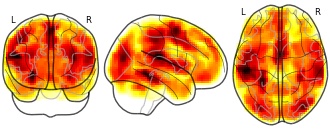
Collection description
This collection contains the factors derived from our analysis in Bolt et al. (2017) published in Journal of Neuroscience.
These factors were derived from a kind of exploratory factor analysis, known as bi-factor analysis. In the factor solution, there is a single general factor and several sub-factors within this general factor. The analysis was conducted on a set of 108 activation maps (i.e. activation from baseline) collected from both the Neurovault database (> 80) and the Human Connectome Project task data. For full details on each of the activation maps, please see Bolt et al. (2017).
Subject species
homo sapiens
Modality
fMRI-BOLD
Cognitive paradigm (task)
None / Other
Map type
Other
- d
[DATA-583] Nested Safes - count + activity
- dune.com
Updated Aug 14, 2024ShareFacebookTwitterEmailClick to copy linkLink copiedCitesafe (2024). [DATA-583] Nested Safes - count + activity [Dataset]. https://dune.com/discover/content/relevant?resource-type=queries&q=code%3A%22dune.safe.result_mainnet_safe_addresses_and_current_owners%22Dataset updatedAug 14, 2024Dataset authored and provided bysafeLicenseAttribution 4.0 (CC BY 4.0)https://creativecommons.org/licenses/by/4.0/
License information was derived automaticallyDescriptionBlockchain data query: [DATA-583] Nested Safes - count + activity
- v
Global export data of Nested Boxes
- volza.com
csvUpdated Nov 14, 2025ShareFacebookTwitterEmailClick to copy linkLink copiedCiteVolza FZ LLC (2025). Global export data of Nested Boxes [Dataset]. https://www.volza.com/exports-indonesia/indonesia-export-data-of-nested+boxescsvAvailable download formatsDataset updatedNov 14, 2025Dataset authored and provided byVolza FZ LLCLicenseAttribution 4.0 (CC BY 4.0)https://creativecommons.org/licenses/by/4.0/
License information was derived automaticallyVariables measuredCount of exporters, Sum of export value, 2014-01-01/2021-09-30, Count of export shipmentsDescription170 Global export shipment records of Nested Boxes with prices, volume & current Buyer's suppliers relationships based on actual Global export trade database.
- d
Data from: Nesting Period Data for Black Brant (Branta bernicla nigricans)...
- catalog.data.gov
- data.usgs.gov
- +1more
Updated Nov 20, 2025+ more versionsShareFacebookTwitterEmailClick to copy linkLink copiedCiteU.S. Geological Survey (2025). Nesting Period Data for Black Brant (Branta bernicla nigricans) in Alaska [Dataset]. https://catalog.data.gov/dataset/nesting-period-data-for-black-brant-branta-bernicla-nigricans-in-alaskaDataset updatedNov 20, 2025Area coveredAlaskaDescriptionThis data package contains one table with nest initiation and end dates and clutch sizes from Black Brant (Branta bernicla nigricans) at two breeding colonies in Alaska. Data include nesting period determined by either nest visits or light-level data recorded by geolocators attached tarsal bands.
FacebookTwitterEmailReplication Data for: Geo-Nested Analysis: Mixed-Methods Research with Spatially Dependent Data
Replication code and sample data used for above mentioned publication in Political Analysis.